Later literary witnesses to the Book of the Giants preserved within Manichaean text
These materials reflect the transmission of Giants narratives in Middle Persian, Sogdian, & related languages, composed centuries after the Qumran fragments.
They are included here as secondary witnesses to the tradition, distinct from the Aramaic manuscript evidence.
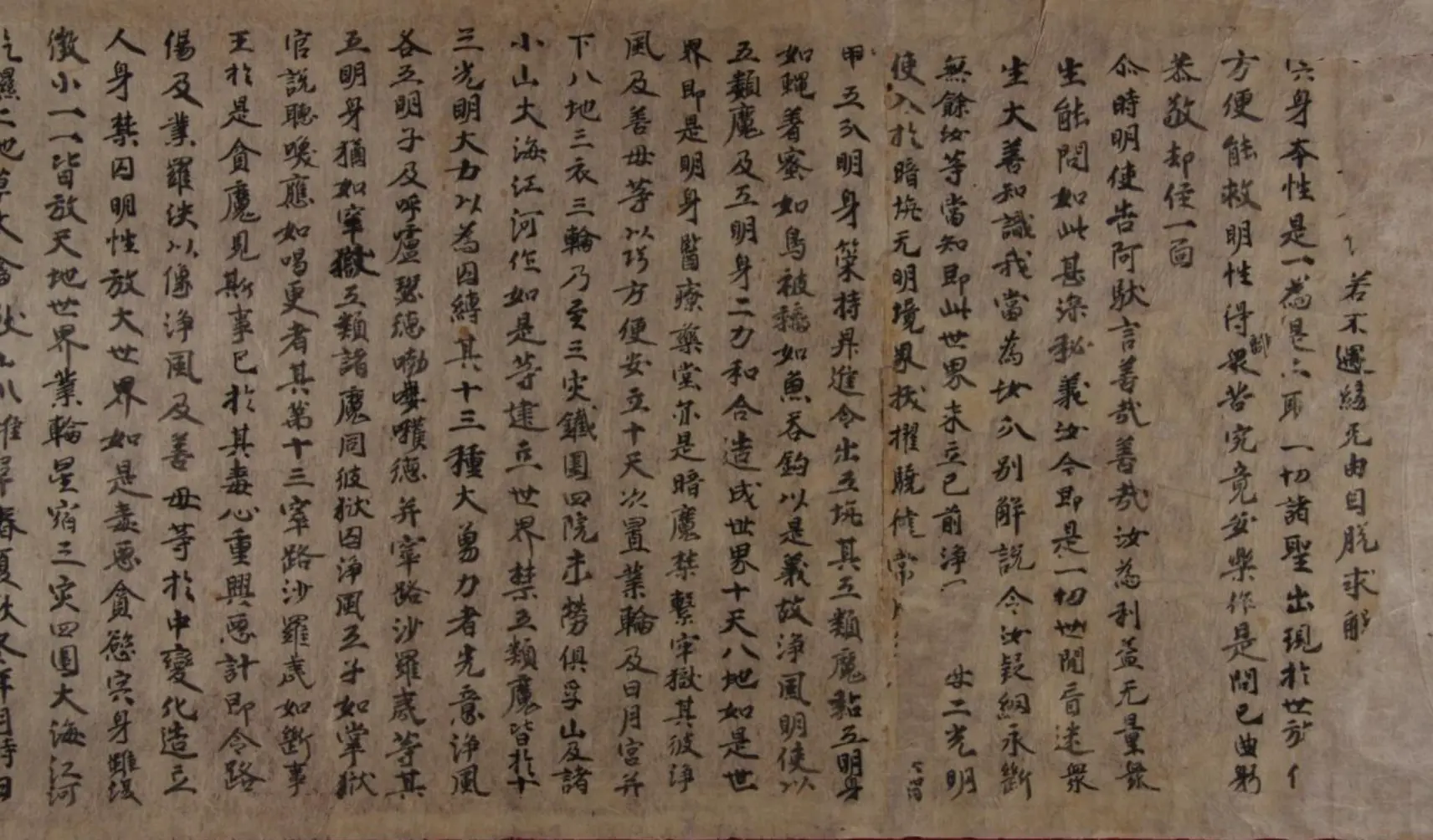
MANUSCRIPT / WITNESS METADATA — MANICHAEAN TRADITION
Witness Type: Later literary witnesses
Source Tradition: Manichaean
Date Range: 3rd–10th century CE
Languages: Middle Persian, Sogdian, Parthian
Textual Relationship: Secondary witnesses to the Book of the Giants tradition
Preservation: Fragmentary manuscripts and embedded literary passages
Provenance: Central Asia (primarily the Turfan region)
Condition: Fragmentary, embedded within theological and mythological Manichaean texts
Structure: Preserves isolated narrative episodes, names, and themes; no continuous narrative
The Manichaean witnesses do not survive as a single manuscript or unified text. They are preserved as scattered fragments and adapted narrative material within Manichaean religious literature.
ARCHIVAL CONTEXT
The Manichaean materials preserve later witnesses to the Book of the Giants tradition through adapted narrative elements embedded within Manichaean texts. Although composed centuries after the Aramaic fragments from Qumran, these materials retain identifiable features of the Giants tradition.
Notably, specific names also attested in the Dead Sea Scroll fragments—such as Ohyah, Hahyah, and Mahaway—appear within Manichaean contexts. The presence of these names is the principal basis on which these texts are recognized in scholarship as witnesses to the Giants tradition, despite their later date and theological reframing.
These witnesses reflect transmission and reuse of earlier narrative material rather than direct copying of a Second Temple Jewish manuscript.
Witness Group I: Middle Persian Material
English Sense (Non-critical)
The Middle Persian Manichaean material preserves narrative references associated with the Giants tradition, including named figures and episodes of impending judgment. Surviving passages allude to the Giants’ awareness of destruction and their response to ominous signs.
Names corresponding to Giants known from the Aramaic fragments, including Ohyah and Hahyah, are preserved in these materials. The narrative voice reflects retrospective recounting rather than direct speech, and the material appears integrated into broader Manichaean cosmological frameworks.
The surviving text is fragmentary and does not preserve a continuous narrative sequence or complete episode.
Witness Group II: Sogdian Material
English Sense (Non-critical)
Sogdian Manichaean fragments preserve additional references to Giants-related figures and themes. These passages include narrative elements associated with fear, judgment, and the consequences of rebellion.
The figure Mahaway, known from the Aramaic Book of the Giants fragments as a messenger or intermediary, is attested in this linguistic tradition. As with the Middle Persian material, the text survives only in isolated fragments and embedded references.
No direct correspondence between individual Sogdian fragments and specific Qumran columns or fragments can be established.
Witness Group III: Paraphrastic and Embedded References
English Sense (Non-critical)
Beyond identifiable fragmentary manuscripts, elements of the Giants tradition also survive as paraphrased or allusive material embedded within larger Manichaean compositions. These references often reflect doctrinal adaptation consistent with Manichaean theology.
While such passages preserve recognizable narrative motifs and names associated with the Giants tradition, they do not constitute manuscript evidence and are treated here as indirect literary witnesses only.
ARCHIVAL NOTE
The Manichaean witnesses do not preserve a continuous or reconstructable Book of the Giants text. They are presented here as secondary literary witnesses, distinct from the Aramaic manuscript fragments recovered at Qumran.
No attempt is made to reconstruct an original narrative, restore missing text, or harmonize these materials with the Dead Sea Scroll fragments. Their value lies in documenting the later transmission and recognition of specific Giants traditions, including shared names and narrative motifs, across time, language, and religious context.
All English Sense descriptions represent non-critical interpretive summaries derived from preserved lexical and thematic indicators. They do not constitute translations, reconstructions, or critical editions.
Digital layout, formatting, and presentation © God Revealed Here.
Redistribution of this digital presentation is prohibited.
These fragments are presented as primary source material only. No attempt has been made to reconstruct
narrative sequence or supply missing text.