The Qumran Cave 4 · Aramaic · Fragmentary Manuscript
Manuscript: 4Q530-533 (4QEnGiantsᵇ–ᶜ ar)
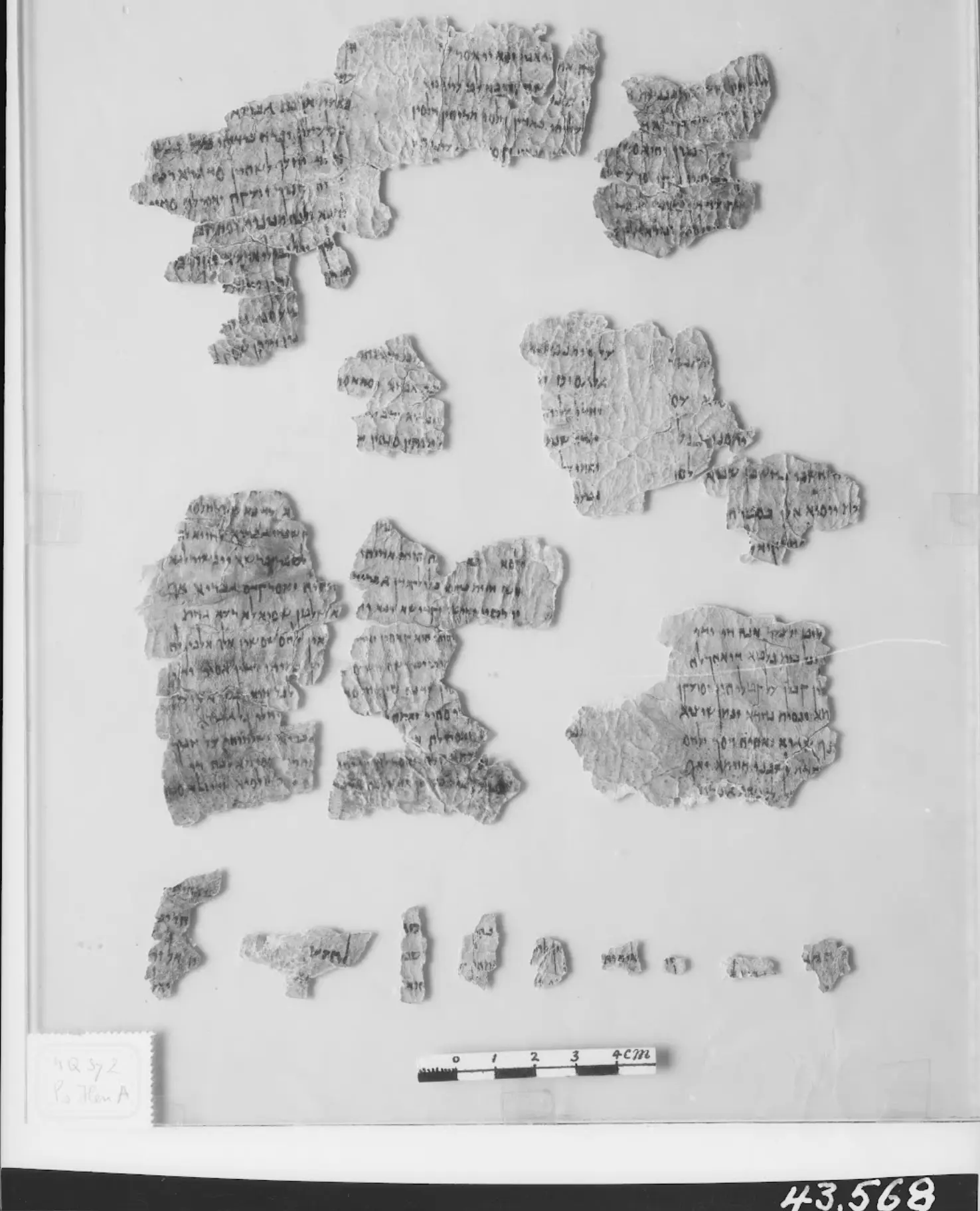
The manuscripts designated 4Q530–4Q533 preserve multiple Aramaic fragment groups associated with the Book of the Giants tradition. These materials survive in a highly fragmentary state and do not form a continuous narrative. The fragments are presented with editorial “English sense” descriptions based on published scholarly editions.
ARCHIVAL NOTE
All known fragments of manuscript 4Q530-533 are preserved in a highly fragmentary state. No additional material from this manuscript survives.
MANUSCRIPT METADATA – 4Q530
Manuscript: 4Q530 (4QEnGiantsᵇ)
Findspot: Qumran Cave 4
Language: Aramaic
Textual Tradition: Book of the Giants
Condition: Extremely fragmentary
Structure: Preserves multiple columns and fragments, but no continuous narrative
Column i — English Sense (Non-critical)
This portion of the manuscript preserves language concerned with reckoning, enumeration, and the passage of time. References are made to waters, counted groups, and periods measured in days or years. The tone suggests an ordered accounting or judgmental framework, rather than blessing or celebration. The fragment is highly lacunose and does not preserve sufficient context to identify speakers, addressees, or a narrative situation. Several clauses are broken beyond recovery, preventing reconstruction of the precise circumstances being described.
Column ii — English Sense (Non-critical)
This column contains material relating to the Giants and their reaction to troubling dreams. Surviving lines refer to named figures traditionally associated with the Giants, including Ohyah and Gilgamesh. The text conveys fear, distress, and confusion, emphasizing the Giants’ inability to interpret what they have seen. Dream imagery includes cultivated spaces and natural growth, followed by destructive elements such as fire and water. The sequence suggests that the dreams are understood as ominous and possibly judicial in nature, prompting discussion among the Giants and a search for authoritative interpretation.
Column iii — English Sense (Non-critical)
This section describes a journey across desolate regions—including the earth, wilderness, and desert—undertaken by a figure seeking Enoch. The text records a direct appeal to Enoch, requesting an oracle or explanation on behalf of the Giants and the Nephilin. The appeal centers on questions of duration, allotted time, and fate, and refers to knowledge that is understood to have descended from heaven. The preserved language reflects urgency and dependence on Enoch as an intermediary capable of interpreting heavenly matters.
Fragment 6 (possibly by a different hand) — English Sense (Non-critical)
This fragment preserves lamentation and accusation language. It speaks of violence committed, the souls of those who were killed crying out, and complaints rising continually. Additional phrases refer to anger, exhaustion, and the heaviness of vision, suggesting psychological and moral burden. The fragment concludes with a reference to entry into the assembly of the Giants. Due to its fragmentary state and possible difference in scribal hand, its precise relationship to the columnar material cannot be determined with certainty.
MANUSCRIPT METADATA – 4Q531
Manuscript: 4Q531 (4QEnGiantsc)
Findspot: Qumran Cave 4
Language: Aramaic
Textual Tradition: Book of the Giants
Condition: Extremely fragmentary
Structure: Preserves multiple independent fragments; no continuous columns or narrative sequence can be securely reconstructed
Fragment 1 – English Sense (Non-critical)
This fragment preserves language describing cosmic and earthly domains: the moon, heavens, earth, vegetation, animals, and humanity. The sequence suggests a comprehensive scope encompassing celestial bodies, agricultural production, animals both large and small, and human beings. References to burning, harsh deeds, and judgmental language indicate that the fragment likely relates to evaluation, corruption, or destruction affecting the created order. Due to its fragmentary nature, the agent of action and the precise event being described cannot be identified with certainty.
Fragment 4 — English Sense (Non-critical)
This fragment contains address and accusation language directed toward named figures traditionally associated with the Giants. Multiple individuals are listed, followed by collective reference to “all these Giants.” The preserved lines suggest confrontation concerning acts of violence, including killing and destruction. Imagery involving swords and rivers implies large-scale judgment or retribution. The tone is judicial rather than narrative, and the fragment does not preserve sufficient context to determine whether the speaker is human, giant, or heavenly.
Fragment 5 — English Sense (Non-critical)
This fragment preserves material concerning defilement, transgression, and excess. References are made to the Giants and the Nephilin, their offspring, bloodshed, and unrestrained consumption. The language suggests moral corruption and escalating violence, culminating in destruction attributed to the Nephilin. The fragment aligns thematically with traditions describing the spread of violence and disorder prior to divine judgment, though no narrative sequence can be securely reconstructed.
Fragment 9 — English Sense (Non-critical)
This fragment contains visionary and theophanic language, including references to immense multitudes, weakness before kings or powers, and a personal encounter involving falling prostrate and hearing a voice. One line contrasts dwelling among humans with not learning from them, suggesting separation between earthly and heavenly knowledge. The fragment is too broken to identify the speaker or setting, but the preserved language indicates a revelatory or judicial context.
Fragment 17 — English Sense (Non-critical)
This fragment preserves a first-person declaration of strength and conflict. The speaker describes growing powerful, waging war, and yet being unable to prevail against opponents who dwell in the heavens and inhabit holy places. The language emphasizes disparity between earthly strength and heavenly power. Later lines introduce Ohyah speaking about a disturbing dream that has driven sleep from his eyes, followed by an appeal to Gilgamesh to recount his own dream. The fragment reflects themes of anxiety, prophetic dreaming, and recognition of inevitable defeat.
MANUSCRIPT METADATA – 4Q532
Manuscript: 4Q532 (4QEnGiantsd)
Findspot: Qumran Cave 4
Language: Aramaic
Textual Tradition: Book of the Giants
Condition: Extremely fragmentary
Structure: Preserves isolated fragments; no secure column structure or continuous narrative can be established
Fragment 2 — English Sense (Non-critical)
This fragment preserves language describing the Giants and the Nephilin in relation to the earth and humanity, with references to flesh, standing upon the earth, and actions attributed to beings associated with the Watchers. The surviving phrases indicate planning, transgression, and the spread of injustice. The fragment refers to death and perishing, suggesting judgment or consequence following excess and violence.
MANUSCRIPT METADATA – 4Q533
Manuscript: 4Q533 (4QEnGiants / Pseudo-Enoch)
Findspot: Qumran Cave 4
Language: Aramaic
Textual Tradition: Giants / Pseudo-Enochic material
Condition: Extremely fragmentary
Structure: Preserves a small number of isolated fragments; one fragment preserves column notation, but no continuous column or narrative sequence can be established
Fragment 1 — English Sense (Non-critical)
This fragment contains prophetic and judgment-oriented language. It references geographic locations (including Mount Sinai and coastal or regional place-names) and speaks of divine action against the “sons of” an unnamed group associated with evil. Imagery includes burning, drying, rejoicing, captivity, and the removal of prior corruption. The tone is punitive but anticipates reversal or restoration following judgment. The fragment preserves prophetic speech but lacks sufficient context to identify speaker or historical setting.
Fragment 2 (col. i) — English Sense (Non-critical)
This fragment preserves language structurally consistent with prophetic judgment discourse. The surviving column notation suggests a formal composition rather than an isolated saying. While the thematic content overlaps with Fragment 1, the fragment’s layout implies it once belonged to a larger prophetic unit now lost.
Fragment 3 — English Sense (Non-critical)
This fragment contains historical-geographical references, including Egypt and “the nations.” The surviving words suggest movement or origin (“from Egypt”) and interaction among peoples. The fragment is too damaged to determine whether it refers to past events, symbolic geography, or prophetic expectation.
All English Sense descriptions represent non-critical interpretive summaries derived from preserved lexical and thematic indicators. They do not constitute translations, reconstructions, or critical editions.
Digital layout, formatting, and presentation © God Revealed Here.
Redistribution of this digital presentation is prohibited.
These fragments are presented as primary source material only. No attempt has been made to reconstruct
narrative sequence or supply missing text.